In every kitchen, whether at home or in a busy commercial environment, chopping boards are among the most frequently used pieces of equipment. They provide the surface on which ingredients are prepared, portioned, and assembled. Despite their simplicity, chopping boards play a crucial role in maintaining food safety and hygiene. When used incorrectly, they can easily become a source of harmful contamination.
Understanding how to use and care for chopping boards properly is essential for anyone involved in food preparation.
Why Chopping Boards Are So Important
Chopping boards come into constant contact with raw ingredients, hands, and kitchen utensils. This makes them a key point where bacteria can spread from one food to another. When raw meat, poultry, or fish is prepared on a board, harmful microorganisms such as Salmonella, E. coli, and Listeria may be left behind on the surface. If the same board is then used for ready-to-eat foods without proper cleaning, these bacteria can be transferred directly to food that will not be cooked again.
This process, known as cross-contamination, is one of the main causes of food poisoning. Good chopping board management helps to reduce this risk and protects both customers and staff.
Different Types of Chopping Boards
Chopping boards are made from a variety of materials, and each has its own strengths and weaknesses. Plastic boards are commonly used in professional kitchens because they are lightweight, affordable, and easy to clean. They are usually dishwasher safe and resistant to moisture, making them practical for high-volume use. However, over time, knife marks can develop and trap bacteria, so they need to be replaced regularly.
Wooden boards are popular in domestic kitchens and traditional settings. They are strong, stable, and naturally antibacterial to some extent. However, they are more difficult to sanitise thoroughly and can absorb moisture, which makes them less suitable for many commercial environments.
Glass and stone boards are sometimes chosen for their appearance and ease of wiping clean, but they are not ideal for food preparation. They quickly blunt knives and can be slippery, increasing the risk of accidents. Composite and bamboo boards offer a balance between durability and sustainability, although their quality can vary.
Preventing Cross-Contamination with Colour Coding
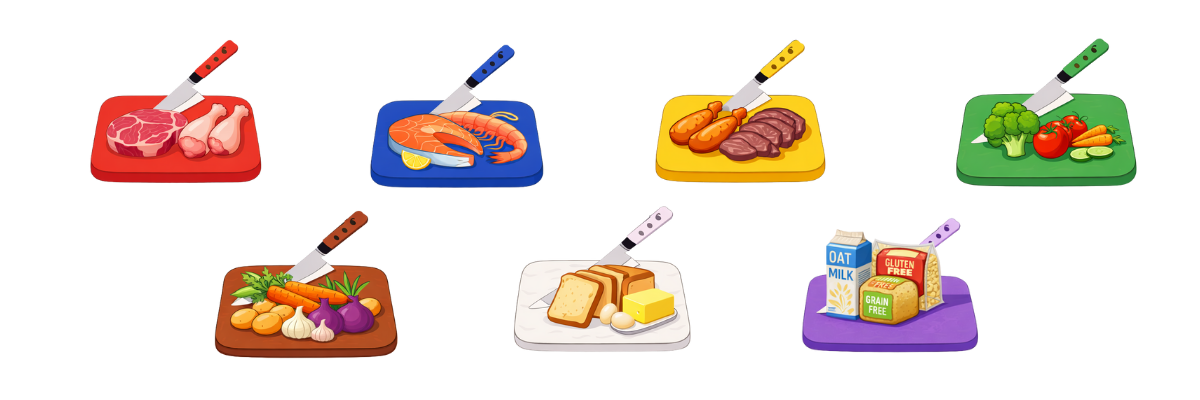
In professional kitchens, colour-coded chopping boards are widely used to reduce the risk of cross-contamination. Each colour is assigned to a specific type of food, such as red for raw meat, blue for raw fish, and green for salad and fruit. By using separate boards for different ingredients, kitchens can prevent harmful bacteria from spreading between food types.
This system only works when staff understand and follow it correctly. Proper training and supervision are essential to ensure that colour coding is used consistently.
Cleaning and Hygiene Practices
Regular and thorough cleaning is vital to keeping chopping boards safe. After each use, boards should be washed with hot water and detergent to remove food residue and grease. They should then be rinsed and sanitised using an approved disinfectant. Once cleaned, boards should be allowed to air dry or be dried with disposable paper towels.
Boards should always be cleaned between different tasks, especially when switching from raw to ready-to-eat foods. Leaving boards dirty or soaking in cold water encourages bacterial growth and increases hygiene risks.
Knowing When to Replace Chopping Boards
No chopping board lasts forever. Over time, repeated cutting creates deep grooves and rough surfaces that are difficult to clean properly. These damaged areas can trap bacteria and food particles, making effective sanitising almost impossible.
Boards should be replaced when they become badly scratched, warped, cracked, or stained, or when unpleasant odours remain after cleaning. Continuing to use damaged boards puts food safety at risk and may lead to poor inspection results.
Storage and Handling
Safe chopping board use does not end with cleaning. Proper storage is also important. Boards should be stored upright where possible, allowing air to circulate and preventing moisture build-up. Clean boards should be kept separate from dirty ones, and storage areas should be kept dry and hygienic.
Staff should also avoid placing boards on unclean surfaces or directly on the floor, as this can quickly undo good cleaning practices.
Chopping Boards and Food Safety Compliance
Under UK food safety regulations and HACCP principles, chopping boards are considered a critical control point. Businesses are expected to identify contamination risks, provide suitable equipment, train staff effectively, and monitor hygiene standards. Environmental Health Officers often check the condition and cleanliness of chopping boards during inspections, making them an important part of legal compliance.
Good chopping board management demonstrates professionalism and a commitment to customer safety.
Although chopping boards may seem like basic kitchen tools, they have a major impact on food hygiene and safety. By choosing suitable materials, following colour-coding systems, cleaning thoroughly, replacing damaged boards, and storing them correctly, food handlers can greatly reduce the risk of contamination.
In food preparation, small details often make the biggest difference. Chopping boards are a clear example of how simple, everyday practices can help protect health and maintain high standards.